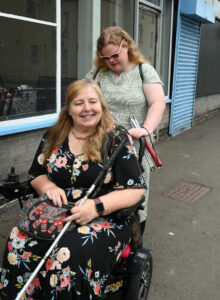
Article by Sheila Mackay, Manager at Centre for Inclusive Living (CILPK) July 2026
For many people, access to a toilet is taken for granted.
For others, it can determine whether they leave the house at all.
Across Perth, older people, disabled people, those living with incontinence conditions, Crohn’s disease, IBS, urinary conditions, dementia, and parents with young children often must plan every journey around one simple question:
“Where is the nearest accessible toilet?”
The reality is stark. Without reliable access to suitable toilet facilities, many people are excluded from everyday life. Shopping trips are shortened. Social activities are avoided. Visits to the city centre become stressful. Independence is lost.
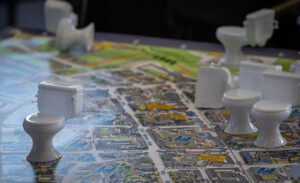
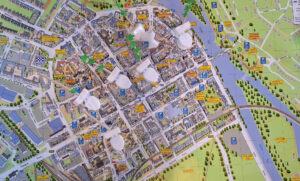
The Toilets Around Perth campaign has brought much needed attention to this issue, highlighting concerns around the availability, accessibility and signage of toilets throughout Perth. The campaign was established to identify, map and evaluate facilities while encouraging improvements where they are needed most. It has found that accessibility barriers remain a significant challenge for many disabled people. [toiletsaro…erth.co.uk]
“No signage on the outside of Perth Museum or Perth Art Gallery to indicate toilets inside” – Lorraine, who attended Toilets Around Perth Event
A Hidden Barrier to Inclusion
When we talk about accessibility, we often focus on ramps, lifts and parking spaces. Yet accessible toilets are just as important.
A town centre can have excellent transport links, accessible buildings and pedestrian-friendly streets, but if someone cannot find an appropriate toilet when they need one, the entire journey becomes impossible.
For many disabled people and those with medical conditions, toilet access is not a convenience, it is a necessity.
Members involved in the Toilets Around Perth campaign describe toilets as one of the biggest barriers to independence. People report that the lack of accessible facilities directly influences where they go and how long they stay. Some speak of the anxiety caused by inaccessible toilets, confusing signage and the removal of familiar RADAR key systems.
No one should have to decide whether a trip to the shops, a doctor’s appointment or a family outing is worth the risk of not being able to find a suitable toilet.
Perth Needs More Than Good Intentions
While public toilets remain important, local authorities across the country face significant financial pressures. Maintaining a large network of dedicated public conveniences can be expensive and challenging.
That is why Perth should embrace and expand a robust Comfort Scheme.
By partnering with local businesses, libraries, community centres and public buildings, the scheme can dramatically increase the number of toilets available to the public without the need for major infrastructure investment.
Participating venues would provide free access to toilets during opening hours, with clear signage and public information allowing residents and visitors to find facilities quickly and confidently.
But this cannot simply be about increasing numbers.
It must be about increasing accessible toilets.
Accessibility Must Be the Priority
An inaccessible toilet is not a solution.
The Toilets Around Perth campaign has already highlighted issues including inadequate manoeuvring space, poor layouts and ineffective signage that create barriers for wheelchair users, people with visual impairments and others with accessibility needs.
Every participating venue should be encouraged to meet best-practice accessibility standards. Information should clearly identify:
Just as importantly, information must be easy to find before people leave home.
For someone living with a long-term health condition, simply knowing that a suitable toilet is nearby can be the difference between participating in community life and remaining isolated.
A Matter of Dignity and Equality
The conversation about toilets is often avoided because people find it embarrassing.
It should not be.
Access to a toilet is a matter of dignity, health and human rights.
If we want Perth to be a welcoming city for everyone, including older residents, disabled people, families and visitors, then access to clean, safe and accessible toilets must be recognised as essential infrastructure.
Nobody should feel trapped in their home because they do not know where they can find a toilet.
Nobody should be forced to limit their participation in community life because facilities are inaccessible.
And nobody should have to choose between their health and their independence.
A Call to Action
The message emerging from the Toilets Around Perth campaign is clear: more accessible toilets are urgently needed, and better information about existing facilities is essential.
A strengthened Comfort Scheme offers Perth an opportunity to make a real difference. By working together, local authorities, businesses, community organisations and residents, we can create a network of accessible facilities that supports everyone.
Because toilets are not simply a convenience.
They are the key to independence, inclusion and participation in everyday life.
And in a modern, inclusive Perth, no one should be left behind because they cannot find an accessible toilet.