Post by Sheila Mackay, Manager at CILPK
Spotlight on Scaffolding: The Hidden Risks for People With Low Vision and Blind Pedestrians
Scaffolding is a routine part of urban life. Whether buildings are being repaired, repainted, or entirely rebuilt, temporary structures appear overnight and often remain in place for weeks or months.
For many pedestrians, scaffolding is an inconvenience that forces a slight detour or a moment of awareness.
For people who are blind or have low vision, unsafe or poorly installed scaffolding isn’t simply inconvenient—it can be dangerous.
This article highlights the key issues surrounding sub-standard scaffolding practices and why accessibility-minded design is essential for creating safe, inclusive public spaces.

Why Scaffolding Matters for Accessibility
People who are blind or have low vision rely heavily on the predictability of the built environment. Paths they navigate every day can suddenly change when scaffolding is erected, introducing:
- New barriers
- Unexpected obstructions
- Height hazards
- Changes in walking surfaces
- Narrowed or redirected walkways
Without proper safeguards and clear cues, these changes increase the risk of injury and reduce independence.

Common Safety Failures That Put Pedestrians at Risk
1. Low-hanging cross-bars and protruding poles
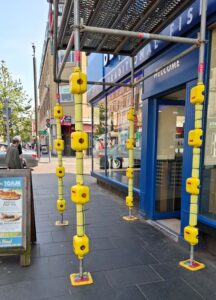
Many scaffolding structures include horizontal bars at head level. For someone who cannot see them, these become serious collision hazards. Even a slight protrusion can cause head injuries or facial injuries.
2. Missing or inadequate protective padding
Where impact hazards cannot be removed, padding must be added. However, padding is often:
- Too thin
- Weather-damaged
- Detached
- Only partially installed
Without sufficient protection, injuries are far more likely if contact occurs.
3. Poor or absent tactile guidance
People who use canes depend on tactile cues such as:
- Ground-level barriers
- Detectable kerbs
- Cane-detectable railings
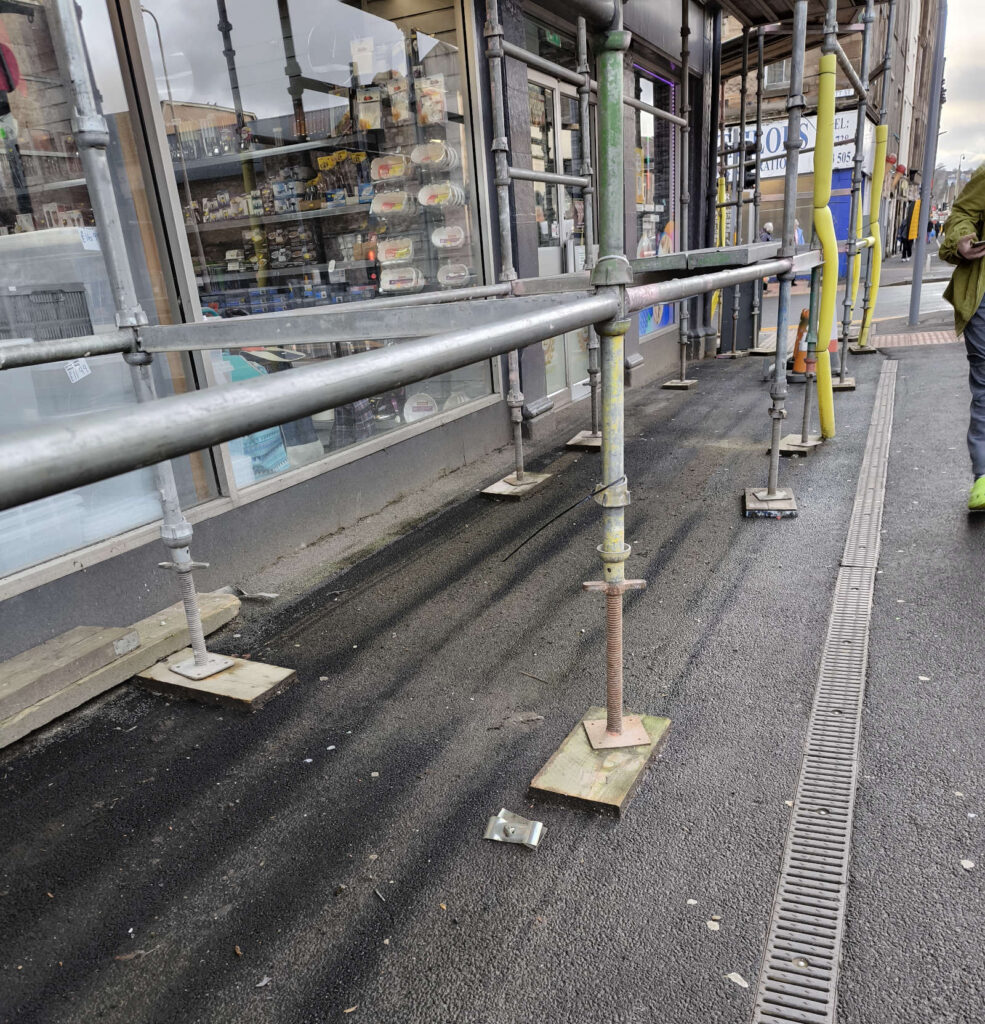
If scaffolding is only partially built at ground level, or poles lift the lowest bars off the footpath, pedestrians can walk directly into danger zones without any warning.
4. Narrow or obstructed pathways
Scaffolding often reduces walkway width. For someone using a cane, guide dog, or mobility aid, this can create:
- Bottlenecks
- Forced interactions with traffic
- Unpredictable pinch points
- Difficulty maintaining orientation
In extreme cases, pedestrians may be pushed closer to moving vehicles.
5. Lack of high-contrast visual markers
People with low vision rely on contrast more than colour. Yet many scaffolding structures use metal poles, dull colours, or faded warning tape—all of which blend into the environment.
Without high-contrast marking, visibility is significantly reduced.
6. Inconsistent or confusing detour signage
If scaffolding requires a detour, signage must be:
- Clear
- High-contrast
- Consistent
- Placed at cane-detectable height
- Positioned before the obstruction
Too often, signs are placed above eye level, too far from the hazard, or not placed at all.

The Broader Impact: Safety, Confidence, and Independence
For people who are blind or have low vision, unsafe scaffolding does more than pose physical risks—it affects confidence. Navigating public spaces already requires skill, planning, and sometimes emotional resilience. When an environment becomes unpredictable or hazardous:
- People may avoid familiar routes
- Independence can be reduced
- Anxiety and stress increase
- Everyday tasks such as commuting or shopping become more difficult
These barriers undermine the right to move freely and safely in public spaces.
What Safe and Accessible Scaffolding Looks Like
1. Cane-detectable barriers at ground level
Horizontal bars or solid boards placed no higher than 10–15 cm above the ground create reliable tactile cues.
2. Clear head protection
All low cross-bars should be:
- Removed where possible
- Relocated higher
- Clearly padded when unavoidable
Padding should be thick, weather-resistant, and brightly coloured.
3. High-contrast visual markings
Use:
- Yellow/black contrasting wraps
- Reflective surfaces
- Large print warnings
These significantly improve visibility for those with low vision.
4. Consistent, accessible detour signage
Signs should be:
- Placed at multiple heights
- Cane-detectable
- Bold and high-contrast
- Positioned before the obstruction
5. Adequate walkway width
Scaffolding must maintain a safe, unobstructed pedestrian corridor that supports mobility aids and guide dogs.
6. Collaboration with disability organisations
Consultation with blind and low-vision advocacy groups leads to safer design and better long-term compliance.
Creating Cities That Work for Everyone
Scaffolding is temporary—but its impact on accessibility is not. Designing safe, accessible structures ensures:
- Fewer injuries
- Greater independence
- Inclusive public environments
- Compliance with safety and equality laws
- Respect for the diverse needs of all pedestrians
When construction professionals, councils, and building owners adopt accessibility-first practices, the built environment becomes safer and more dignified for everyone.